
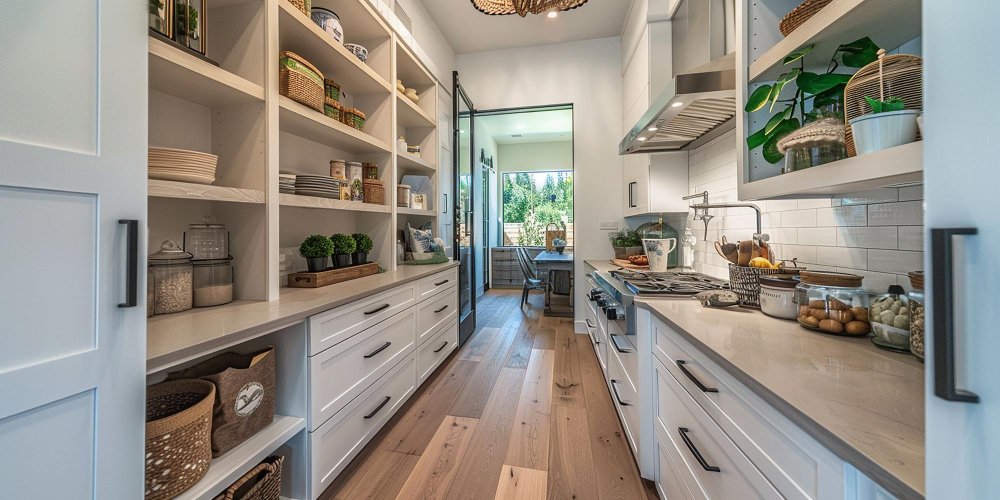
Why a Custom Pantry Makes All the Difference
Every home is unique, and so are its storage needs. A custom pantry allows you to tailor shelving, drawers, and compartments to fit your cooking habits, family size, and available space. Unlike standard cabinets, custom pantries provide purposeful zones for dry goods, small appliances, and dinnerware—keeping everything in its place and within easy reach.
Whether you love to cook or simply crave order, a pantry built around your lifestyle turns everyday chaos into seamless efficiency.
1. Maximizing Space With Smart Design
Pantry design starts with layout optimization. Designers evaluate available space, natural lighting, and access points to ensure flow and functionality. Even a small corner can become a high-performing storage hub with creative use of vertical shelving, lazy Susans, and sliding drawers. Pull-out baskets and tiered racks make it easy to see every item at a glance, preventing waste and overbuying.
For larger kitchens, walk-in or butler’s pantries offer both storage and prep zones, giving homeowners space to stage meals or store appliances out of sight.
2. Choosing the Right Storage Solutions
Customization goes far beyond shelving. Modern pantries feature built-in bins, glass jars, spice drawers, and appliance garages—all tailored to maximize convenience. Adjustable shelving ensures flexibility as your needs evolve, while dedicated areas for baking sheets or wine storage add a touch of luxury.
Pull-out drawers and soft-close mechanisms enhance accessibility, while LED lighting brings visibility and ambiance to every corner.

3. Material and Finish Options
Because a pantry is both a functional and visual feature, material selection matters. Durable wood veneers, melamine finishes, and moisture-resistant laminates ensure longevity and easy cleaning. Many homeowners coordinate their pantry’s design with surrounding cabinetry for a cohesive, high-end look.
Popular finishes include natural oak, matte white, or rich espresso—each adding character while complementing modern kitchen palettes. Custom hardware, such as brushed brass or matte black handles, completes the aesthetic with subtle sophistication.
4. Incorporating Design Features for Efficiency
Pantry design is about creating systems that make life easier. Vertical dividers keep trays and cutting boards organized. Pull-out drawers beneath counters store snacks or kitchen tools. Integrated countertop space can serve as a mini coffee bar or appliance station—keeping main counters clutter-free.
Adding a chalkboard wall or built-in whiteboard provides a spot for grocery lists and meal planning, turning your pantry into a command center for daily routines.
5. Walk-In vs. Built-In Pantries
Not every home has space for a full walk-in pantry, but that doesn’t mean you can’t enjoy custom storage. Built-in pantries are perfect for smaller kitchens, seamlessly integrating into existing cabinetry. Walk-in versions, on the other hand, provide room for bulk storage, prep areas, and even secondary sinks or refrigerators.
Design-build professionals can help determine which option best suits your space, budget, and goals—ensuring every square foot serves a purpose.
6. The Role of Lighting in Pantry Design
Good lighting is essential for both function and aesthetics. LED strip lighting, recessed fixtures, and motion sensors enhance visibility and efficiency. Under-shelf lighting not only illuminates stored items but also adds a soft glow that highlights craftsmanship and materials.
Energy-efficient lighting options make daily use convenient while maintaining a clean, modern appearance.
7. Blending Aesthetics With Practicality
A well-designed pantry should reflect the home’s overall style. Glass-paneled doors showcase organization while adding elegance, while solid cabinetry offers a minimalist, streamlined appearance. For open shelving, matching containers and labels create a cohesive, designer-inspired look that’s as functional as it is beautiful.
These design details transform an ordinary storage area into an extension of your kitchen’s personality and charm.
8. Sustainability and Quality Craftsmanship
Eco-conscious homeowners are increasingly opting for sustainable pantry materials. Cabinets made from recycled wood, bamboo, or low-VOC finishes contribute to a healthier indoor environment. Quality craftsmanship ensures durability, reducing the need for frequent replacements and minimizing waste.
By investing in sustainable design, you create a pantry that’s as responsible as it is refined.
9. Professional Design and Installation
While DIY solutions can work temporarily, a professionally designed custom pantry delivers long-term satisfaction. Experienced remodelers assess your space, suggest innovative features, and ensure flawless installation. The result is storage that feels intentional and tailored, not improvised.
Visiting a Sacramento home improvement showroom can spark inspiration—offering full-scale displays of cabinetry, finishes, and organizational systems. Seeing options firsthand helps homeowners make confident design decisions.
10. Everyday Benefits That Last
The advantages of a custom kitchen pantry go beyond convenience. It saves time during meal prep, reduces clutter, and enhances your enjoyment of the space. When every item has a designated home, your kitchen becomes calmer and more efficient. These subtle changes can transform how you cook, entertain, and live day to day.
For Sacramento homeowners seeking both elegance and utility, the custom pantry is an investment that delivers—turning everyday living into an organized art form.